

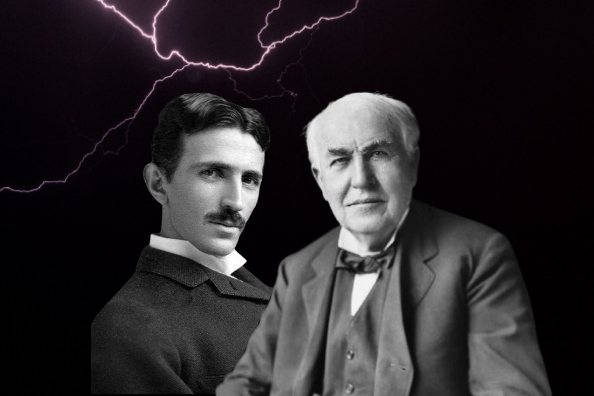
‘War of the Currents’: Edison vs Tesla
The names Thomas Edison and Nikola Tesla are probably familiar to almost everyone: both were pioneering inventors who held numerous patents. In the late 19th century, as electric lighting and power grids began to be developed on a wider scale, a major debate emerged over which system should be used to deliver electricity to homes and factories. Edison supported the use of direct current, while Tesla argued in favour of alternating current. The highly publicised commercial and technological battle involving the two men and the companies backing them became known as the “War of the Currents”.
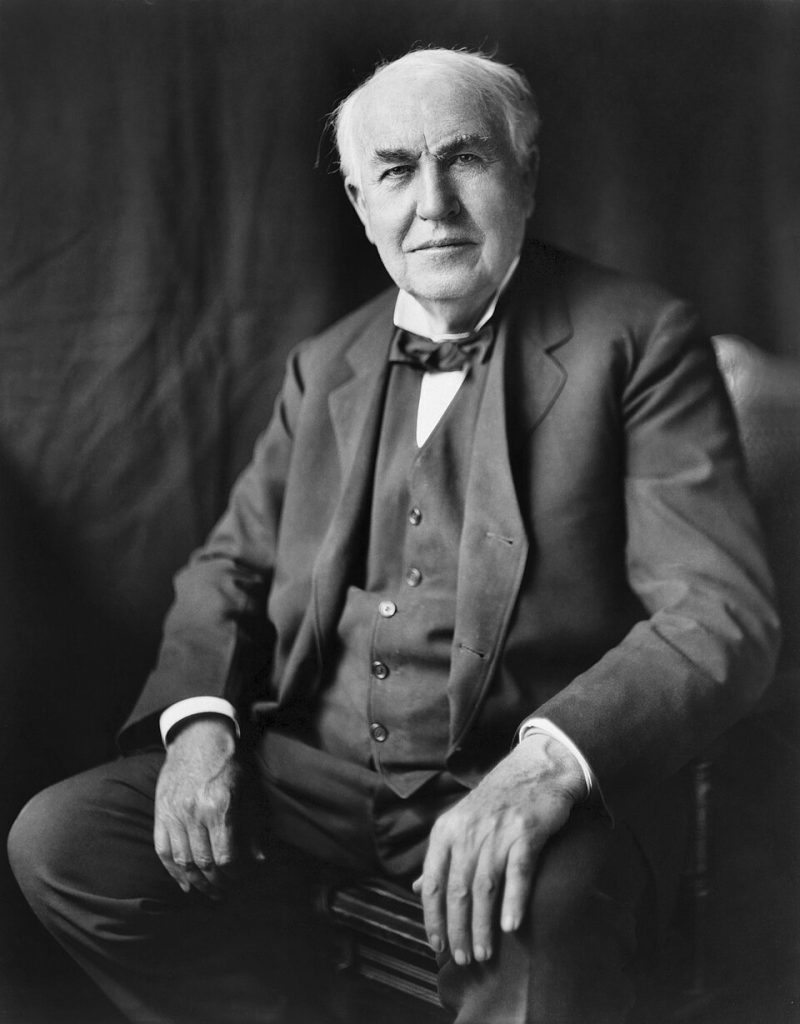
Thomas Alva Edison was an American inventor, researcher and successful businessman whose name is associated with more than a thousand patents. He was involved in the development and popularisation of inventions such as the phonograph and early motion-picture technologies. He worked with a large team at his laboratory in Menlo Park and is therefore often described as one of the pioneers of modern industrial research.
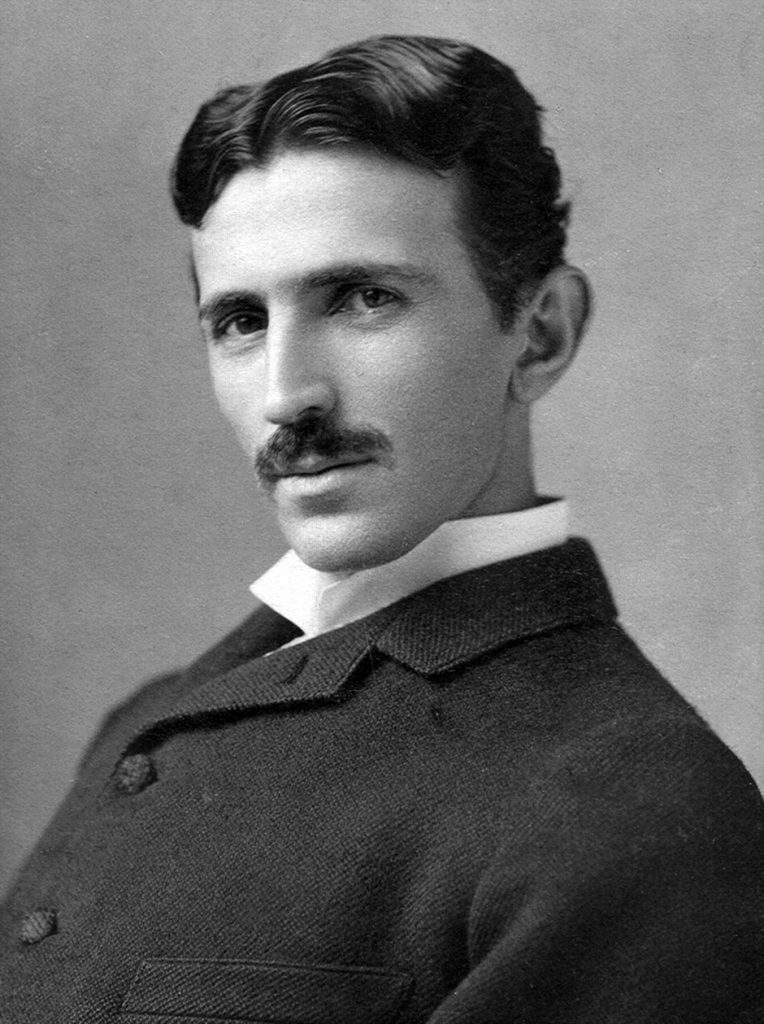
Nikola Tesla was a Serbian-born American inventor and engineer who became famous for his extraordinary imagination and ideas that were far ahead of their time. He worked on numerous inventions during his lifetime, and several hundred patents were registered in his name. His eccentric personality, spectacular demonstrations and bold vision of the future made him a legendary figure even during his own lifetime.
Edison: direct current (DC)
With direct current, electric charge always flows in the same direction, whereas alternating current continuously changes direction. In Hungary, mains electricity changes direction 50 times per second, which is why we say that its frequency is 50 Hz. The electrons effectively oscillate within the wire.
A battery cell or rechargeable battery supplies direct current, while solar panels also generate DC, and phones and laptops require it to operate. So why does alternating current flow through the wiring in our walls? To answer that question, we need to go back in time.
By the early 1880s, Edison had already developed a complete DC system consisting of power stations, wiring, meters and incandescent light bulbs. In 1882, he opened his first direct-current power station in New York, on Pearl Street, which was able to supply nearby buildings with electricity. The power generated using steam turbines was carried to consumers through copper cables within a radius of approximately 800 metres.
Tesla: alternating current (AC)
Tesla travelled to the United States in the early 1880s at the invitation of Edison’s company. He recognised and repeatedly highlighted the greatest disadvantage of direct-current systems: electricity was difficult to transmit economically. At low voltages, carrying it over longer distances required extremely thick copper cables, while a great deal of energy was lost as heat. Converting it to a higher frequency was not yet possible at the time, meaning Edison’s system would have required a power station every few streets. Tesla, by contrast, favoured and researched alternating-current systems.
The major advantage of AC systems was that transformers made it easy to convert the electricity to a higher frequency, allowing it to be transmitted with far lower losses. In 1888, the American businessman George Westinghouse purchased the rights to Tesla’s alternating-current patents and began promoting the system with the help of his manufacturing capacity and business network.
The “War of the Currents”
By this point, Edison’s companies had already invested enormous amounts of money in DC infrastructure and the patents associated with it. The spread of AC was therefore not merely a technical disagreement, but also a serious commercial threat. Westinghouse offered to build power stations at lower prices than Edison, prompting Edison to launch a negative campaign that sought to draw attention to the dangers of AC systems. Stray dogs were allegedly captured and electrocuted with alternating current in front of spectators to demonstrate how extremely dangerous it was.
What decided the contest?
Two spectacular successes:
- The 1893 Chicago World’s Fair. Westinghouse’s company illuminated the exhibition using an AC system, and did so at a lower quoted price than Edison’s system. The vast exhibition, flooded with light, demonstrated that alternating current was viable on a large scale.
- The Niagara Falls power station. Using the Tesla–Westinghouse polyphase AC system, energy from the falls was transmitted approximately 26 miles to the city of Buffalo. Buffalo began receiving electricity from the Niagara power station in 1896, effectively proving the long-distance advantages of AC.
Edison’s companies therefore lost this technical and commercial contest, but that does not mean direct current was “bad”: batteries, computers, mobile phones and electric cars are all based on direct current.